Buckley Steel Fencing: Durable, Low-Maintenance Security in Colorado Springs
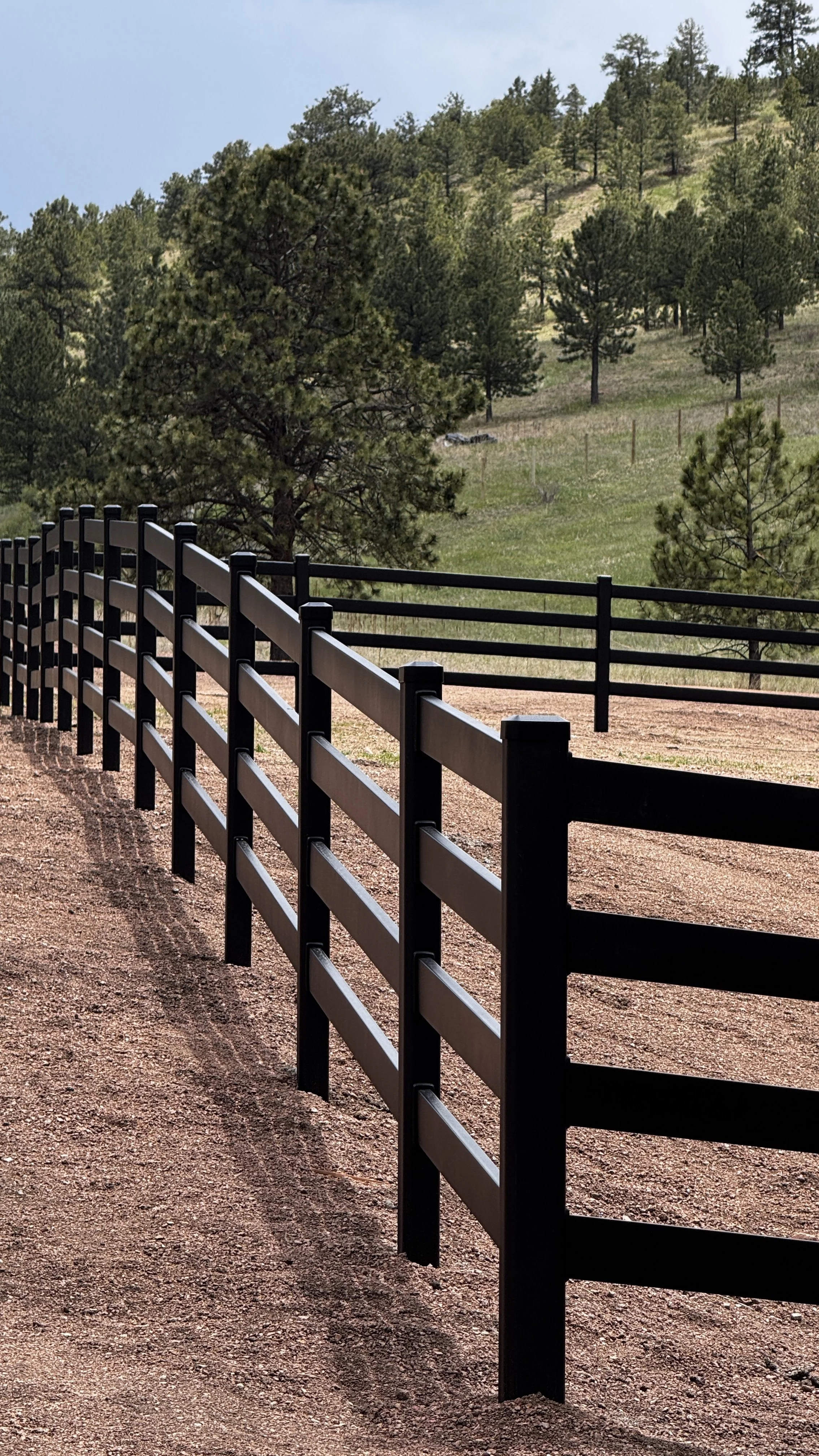
If you like classic ranch rail but you’re tired of splintered boards, warped rails, and yearly repairs, Buckley steel fencing is the upgrade a lot of Front Range property owners ask about — especially people with horses.
Buckley (Commerce City, Colorado) makes a steel board / ranch-rail fence — typically 2-, 3-, or 4-rail styles in powder-coated finishes (black and white are common) — that reads like traditional post-and-rail from the road, with steel rails and posts. Rails lock in without a forest of nails. Paragon Fence Co installs this system for Colorado Springs, Fountain, Monument, and nearby acreage when the job calls for it.
Built with horses in mind
Horse property is where Buckley earns its keep. Horses lean, rub, spook, and test a fence. Wood rail that looks fine from the road can leave you with broken boards, sharp splinters, and a horse that learned the hard way where the weak spot was.
Visibility. A clear rail profile helps horses see the boundary. They’re less likely to run through or tangle in something they didn’t notice until the last second — a real issue on open Front Range pastures and turnout lots.
Flex and impact. Steel board is designed to take a hit and give a little instead of snapping like brittle wood. That matters when a horse bumps a rail at speed or leans hard along a paddock line. You’re not picking splinters out of a coat — or worse — after a board fails.
Smooth edges. Horses investigate with their mouths and bodies. Smooth, finished steel rails reduce the snag-and-cut risk you get from cracked lumber, popped nails, and chewed corners on aging wood rail.
Pasture, paddock, and turnout. Many Buckley installs aren’t suburban privacy jobs. They’re driveway approaches, pasture boundaries, paddocks, and acreage lines where you need a fence that stays upright through wind, weather, and daily horse traffic. Gates can be planned to match rail count and color so the line looks intentional, not patched.
Less babysitting. Horse owners already spend enough time on water, feed, and footing. A fence that doesn’t demand constant board replacement after every hail storm or dry summer is one less chore on the list.
If you’re fencing for horses, tell us how you use the space — turnout, stallion paddock, perimeter, arena approach — so rail count, height, and gate placement fit the way your animals actually move.
Why people pick it (beyond the barn)
Durability without the wood chores. Wood rail looks right until hail, livestock, or a dry summer chew it up. Steel board stays straighter through temperature swings and skips the endless stain-and-replace cycle.
Curb appeal that stays clean. Black 4-rail along a drive or white 3-rail around a pasture stays crisp under Colorado sun longer than unfinished wood.
Front Range weather is the real test
• Hail can shred soft wood; steel board shrugs off hits that send cedar to the dumpster.
• Chinook winds and open lots load posts hard — shallow holes lean; deep posts in concrete hold the line.
• High UV and dry summers fade and check wood; powder-coated steel is made for long sun (still inspect coatings like any exterior finish).
• Freeze-thaw heaves lazy footings. Buckley’s install guidance calls for posts in wet concrete with deep augered holes — the same frost-and-rock reality we dig for on other fence installs.
If a bid for any rail system is silent on depth and concrete, ask. Pretty rails on short posts are still a leaning fence.
Buckley vs wood rail (honest)
Buckley isn’t a privacy fence. It defines space and contains livestock; it doesn’t hide the neighbor’s RV. Wood rail can look right and cost less upfront on a long run — then you’re budgeting stain, splinters, hail damage, and horse-related board repairs. Buckley wins when you want ranch character, horse-sensible boundaries, and fewer replacements.
Why not vinyl rail for this job
People ask about vinyl ranch-style rail as “low maintenance.” For pasture, paddock, driveway, and horse fencing, we don’t recommend it.
Hail is the clearest reason on the Front Range. One bad storm can crack, punch, or shatter vinyl rails and panels. Buckley steel board takes the hit and keeps the line — you’re not replacing a run after every hail season.
Vinyl also doesn’t handle livestock impact the way steel board does, and it reads plastic from the curb next to real ranch rail. For this job we install Buckley — not vinyl rail.
How we install it
Posts go deep enough for local frost and wind, set in concrete, plumb, then rails lock to manufacturer spacing. Rocky Front Range soil can mean longer digs — normal here. We’ll match rail count, color, and gates to your layout after a site look — including horse-property flow if that’s your world.
Permits and HOA approvals follow your written estimate and local rules same as any Paragon job. Ask what’s included before you sign.
Ready for a walk of the line?
Fencing pasture, lining a drive, building a paddock, or replacing tired wood rail around Colorado Springs or the Front Range? We’ll tell you straight whether Buckley fits — or whether a different fence style is the smarter spend for your yard.
Paragon Fence Co — fences and decks, dug for this climate. Request an estimate at paragonfenceco.com or call (719) 330-7146.