If you’ve watched a “straight” fence lean after one Colorado Springs winter, the problem usually isn’t the boards.
On the Front Range, freeze–thaw cycles, chinook temperature swings, and rocky or clay soil punish shallow installs. Water gets into a short hole, freezes, expands, and lifts the post. Come spring the run looks wavy. Come year two, gates drag. Come year three, you’re paying for a rebuild that should have been done right the first time.
What “deep enough” means here
There isn’t one magic number for every El Paso County lot. Soil changes block to block — granite in one yard, sticky clay in the next, then a slope that needs stepped panels. Still, a useful rule of thumb for residential wood and vinyl privacy fences around Colorado Springs is to set posts below the frost-active zone. The Pikes Peak Regional Building Code, which covers Colorado Springs and El Paso County, uses a 30-inch frost depth for building footings. Fence posts aren’t covered by that table, but a good installer sets them at least that deep, in concrete.
That’s practical guidance for a typical backyard fence — not a substitute for an engineer on tall walls, retaining situations, or commercial work. If your fence is over local height triggers, on a corner lot, or tied into a wall, check Pikes Peak Regional Building Department rules and your HOA before you dig.
Why cheap bids heave
The quote that looks too good often skimps where you can’t see it: holes stopped at 18–24 inches, little or no concrete, undersized posts, or hitting rock and “calling it good.” Hail and sun get the blame for ugly fences. Heaving comes from the ground.

When posts give out, the whole run leans — a common Front Range failure mode.
Rocky lots, clay, and steel posts
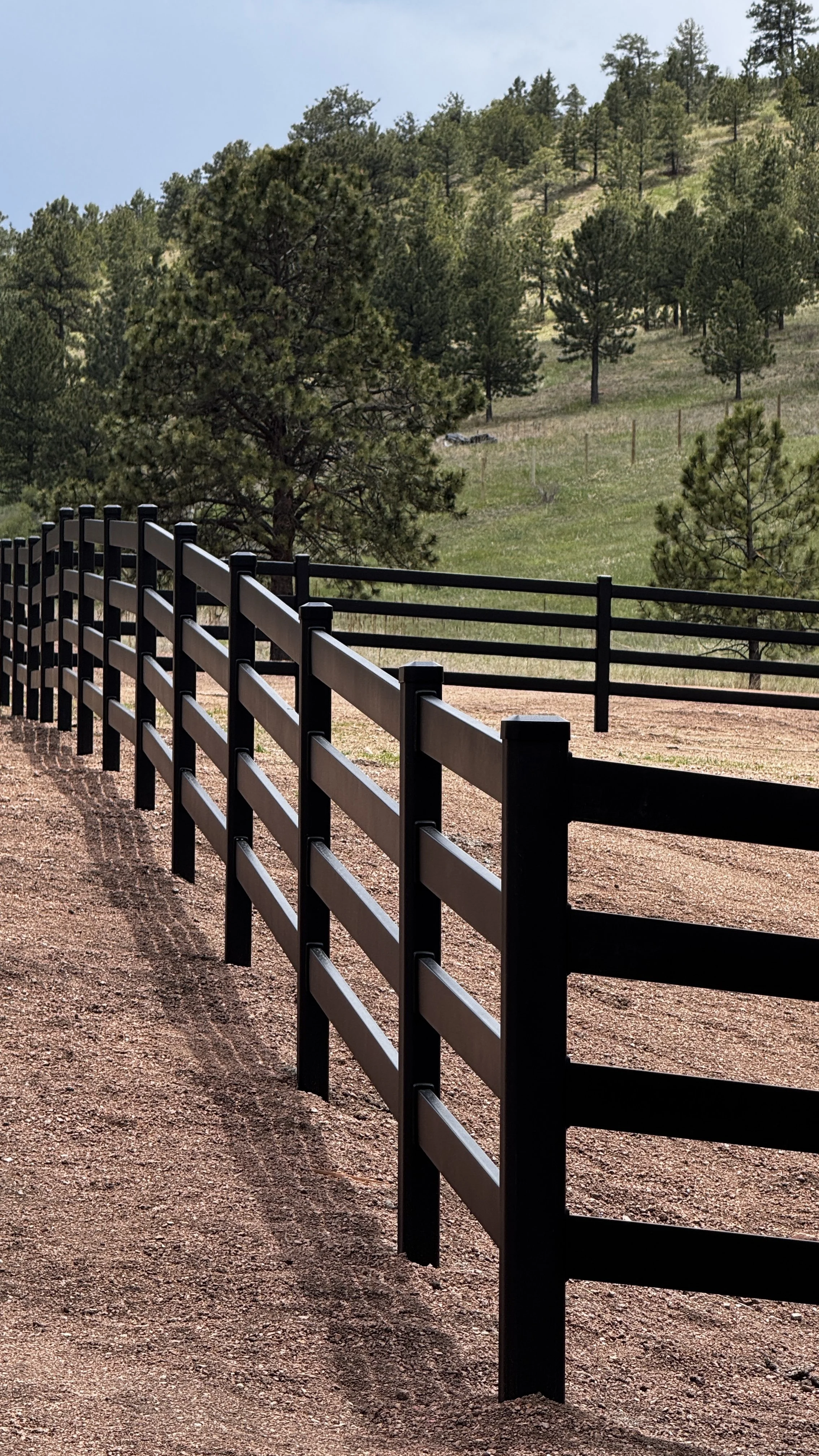
Plumb posts on a sloping Front Range lot — depth and concrete matter more than the boards.
Rocky soil means longer digs (sometimes equipment). Clay holds water against the post and freezes hard. Both argue for proper depth and a full concrete collar — not dirt backfill or a splash of mix at the top.
For cedar privacy runs, steel posts in concrete are a strong local choice: less rot at grade, better line in wind, solid with wood rails and pickets. Vinyl should follow the manufacturer’s post, still set deep and plumb. Steel isn’t magic if the hole is shallow. Depth and concrete do the heavy lifting.
Ask before you hire
When you compare bids, ask: how deep are the posts, what size, concrete or not, wood or steel? A clear answer beats “industry standard.”
Paragon Fence Co builds residential fences and decks for Colorado Springs, Fountain, Monument, and nearby Front Range neighborhoods. We dig for this climate, not for the fastest hole. Want a straightforward look at your yard? Request an estimate at paragonfenceco.com or call (719) 330-7146.